
Anthropic Ships Sonnet 5 With Agentic Safety and Pricing Details
1 July 20265 min read
Researchers reported a catalyst architecture that separates reaction steps across different active sites, improving methanol production from carbon dioxide without sacrificing selectivity.
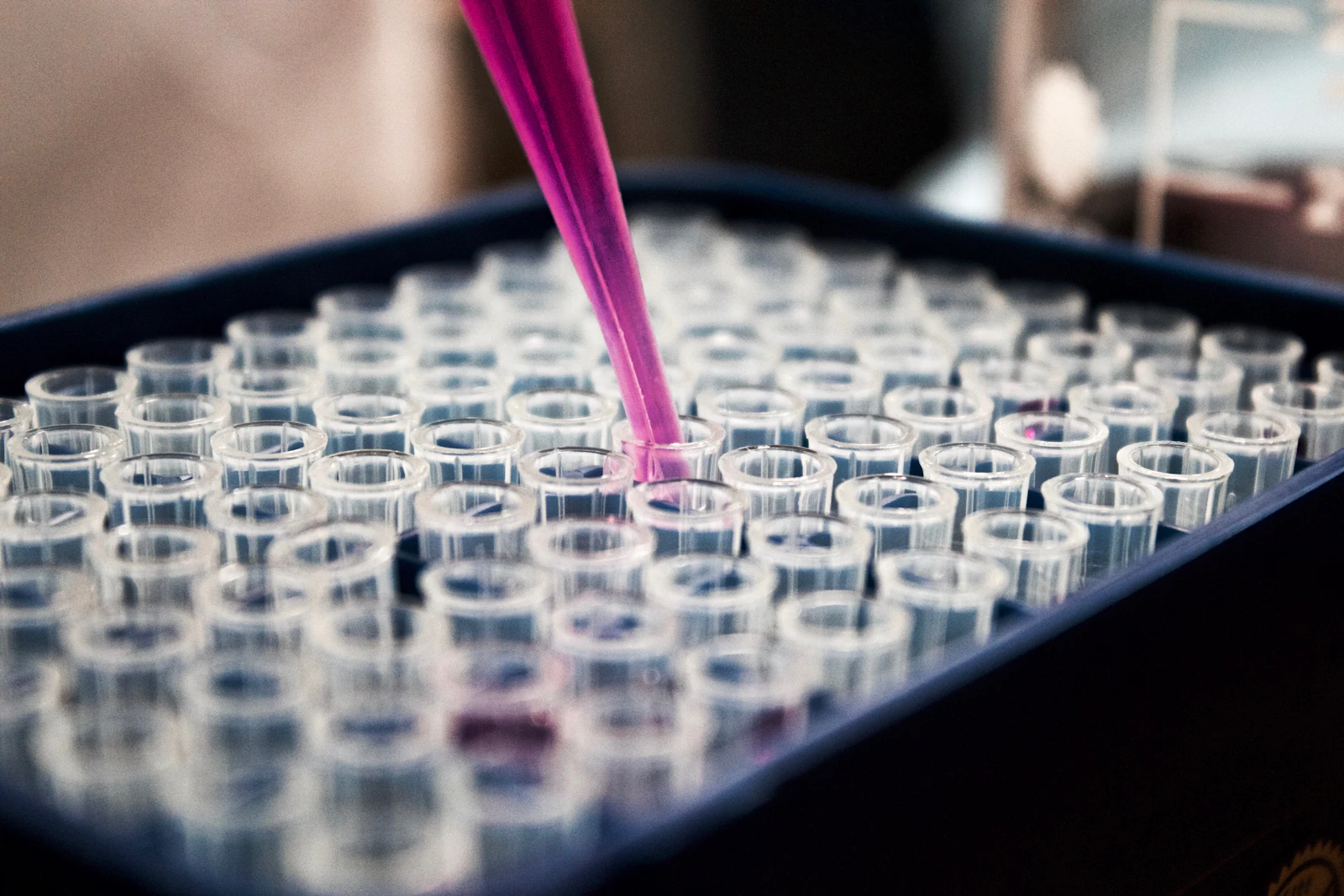
Illustrative image. Cedar S. Insights uses editorial stock photography; images do not depict specific events described in articles.
A catalyst result from the Dalian Institute of Chemical Physics, Chinese Academy of Sciences, points to a practical bottleneck in carbon-utilisation technology: converting carbon dioxide into methanol efficiently while avoiding unwanted byproducts.
Methanol matters because it is both a fuel and a chemical feedstock. If CO2 can be converted into methanol with high activity and selectivity, carbon recycling becomes more plausible for parts of the chemical and energy system that are difficult to electrify directly.
The long-standing problem is a trade-off. Lower temperatures favour methanol thermodynamically, but CO2 is harder to activate. Higher temperatures speed the chemistry, but also encourage the reverse water-gas shift reaction, which produces carbon monoxide and lowers methanol selectivity.
The team used a strong metal-support interaction-driven overlayer structure to spatially separate active sites in the catalyst. In simpler terms, the catalyst surface was designed so that different parts of the reaction can happen in different places rather than forcing one surface to do everything.
ScienceDaily's account of the work says the catalyst reached a space-time yield of 1.2 grams per gram of catalyst per hour at 300 C and 3 MPa. That was about three times higher than conventional commercial copper-zinc-aluminium catalysts under the comparison described.
The mechanism is important. The researchers found that CO2 adsorbed and activated mainly on zirconia sites, steering the reaction through a formate pathway. Hydrogenation happened first, with C=O bond cleavage later, reducing carbon monoxide byproduct formation while preserving copper's ability to dissociate hydrogen.
This is not yet a deployment story. Lab and journal results still have to survive scale-up, catalyst lifetime, process economics, hydrogen sourcing and integration with industrial systems. But it is a meaningful materials-and-process development because it targets the activity-selectivity trade-off that has held back CO2-to-methanol yields.
For the clean-tech industry, the signal is that carbon utilisation will not be solved by carbon capture alone. It also needs chemistry that can turn captured carbon into useful products with acceptable yield, energy demand, stability and cost.
Carbon utilisation depends on catalytic performance as much as capture capacity. A catalyst that improves methanol yield while reducing byproducts could change the economics of CO2-to-chemicals pathways if it scales.
Watch catalyst lifetime data, pilot-scale demonstrations, green-hydrogen sourcing and whether the design can be adapted to industrial reactors.
Our sourcing: Cedar S. Insights provides source-led editorial analysis. Reported company, institutional and regulatory claims are attributed to their original sources unless stated otherwise.
Corrections: If a material factual error is identified, Cedar S. Insights will update the relevant article and preserve the distinction between the corrected statement and supporting evidence.
Topics